| | This Issue Update newsletter is part of a series that provides more information on each priority issue on the Alliance's 2026 Legislative Agenda. The Legislative Agenda is crafted annually in partnership with early childhood organizations that are advancing legislative policy solutions related to health, safety, food security, economic security, and early care and education. The priority issues were selected by the Alliance's Steering Committee. | | | | The Alliance’s series of virtual Issue Spotlights continues February 9, at 3:00 pm, and will focus on the request by the United Ways of VT for adequate investment to ensure that Vermont 211 can continue to provide consistent, high-quality support to Vermonters in need, and on the efforts by advocates to secure improvements to state administrative systems and data infrastructure to allow for decreases in processing time. | | | | | | Information and Referral: Ensuring a Strong, Sustainable Vermont 211 For years, Vermont 211 has been promoted as the trusted, single number connecting residents to essential services and disaster support. Like many human services organizations across the state, Vermont 211 is facing staff recruitment and retention challenges. To ensure the ongoing sustainability of Vermont 211, adequate funding is needed to support staff and operations, and investment in innovations to ensure that Vermont 211 can best serve the community’s emergency services and health-related social needs. The Alliance supports the United Ways of Vermont’s request for adequate investment to ensure that Vermont 211 can continue to provide consistent, high-quality support to Vermonters in need. Legislative Update The Governor’s Recommended FY 27 Budget reflects a $332,000 reduction in funding for VT 211. This is the exact amount that was added to the program’s base level funding last fiscal year, to ensure the program could maintain current 24/7 operations. AHS’s justification for the reduction is their belief that VT 211 does not need to operate during the overnight hours, as there are no hotels to connect individuals seeking emergency housing with after a certain point in the night. VT 211 is in agreement with a reduction of hours as the cost per call overnight does not justify the amount of money being invested in an out-of-state for-profit call center, which covers for VT 211 from 12am to 8am. Additionally, overnight hours create false hope for callers when there are no services available to refer them to. However, by reducing hours, VT 211 can operate within a level-funded contract amount of $1,638,029 for FY 27 and still keep up with increased business costs – essentially a sustainable funding level that reflects modern times after decades of chronic underfunding. A funding reduction would not support adequate staffing to respond to the current need and call volumes during the hours that VT 211 can actually help Vermonters and connect them with resources. The message across Vermont is clear – call 211 for assistance during times of need. As federal program changes and funding reductions ripple through communities, more Vermonters are reaching out, many for the first time, seeking guidance, stability, and connection to essential services. VT 211 is critical state infrastructure. Families and communities are feeling intensified pressure, and the state relies on VT 211 to absorb increased demand, adapt quickly to policy shifts, and deliver timely, accurate information and referrals. In addition to adequate staffing levels to meet current and anticipated need, with a full, level funding amount in FY 27, VT 211 can leverage a blend of public and private funding to deliver the following: - Replacement of a severely outdated database to ensure speed, accuracy, and flexibility
- Proactive statewide outreach so VT 211’s database remains the single, trusted source for health and human services available to Vermonters
- New tools that address social factors affecting health
- Improved data reporting systems
February 11 (2/11) is 211 Day, a celebration of 211 and a chance to raise awareness of our critical services. We will be in the Card Room at the State House from 8:30am to 3:30pm speaking with legislators and advocating for our full funding level. | | | | 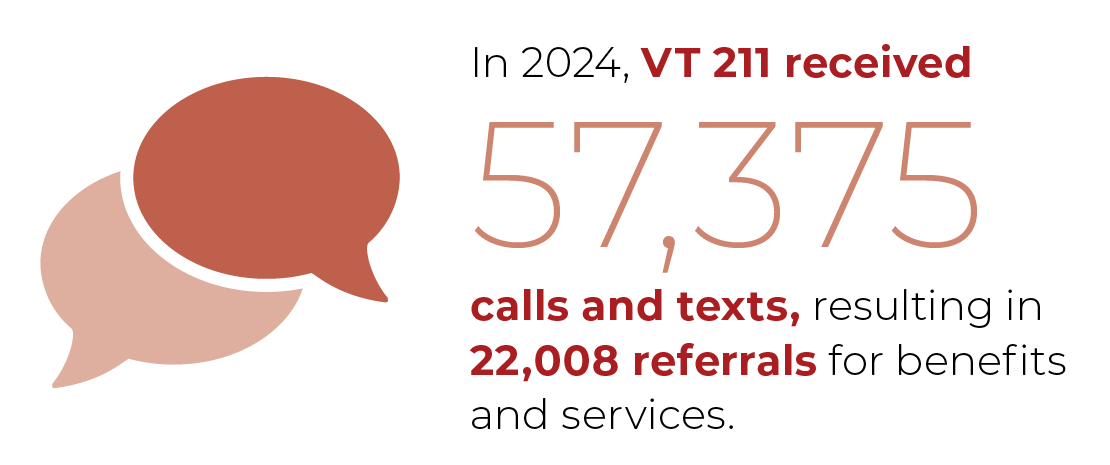 | Data and Talking Points - In 2024, VT 211 received 57,375 calls and texts, resulting in 22,008 referrals for benefits and services
- Vermont 211’s database contains 1116 agencies and 3192 programs
| | | | Lead Organization United Ways of VT The mission of the United Ways of Vermont (UWsVT) is to provide a forum for mutual support and training for local United Ways. UWsVT keeps a broad, statewide perspective and supports each local United Way by encouraging collaboration and providing support. Vermont 211 is a program of UWsVT. | | | | | | Fingerprinting: Streamline and Modernize Background Checks for Early Childhood and Afterschool Educators Early childhood education and afterschool programs across Vermont are experiencing long delays in fingerprinting and background check processing, which prevents new staff from being hired quickly. These delays, which average seven weeks, directly impact program capacity and family access. Faster hiring will ensure programs can operate at full capacity, reduce waitlists for families, and make full use of the additional state investments made through Act 76. The Alliance supports advocates’ effort to secure improvements to state administrative systems and data infrastructure to allow for decreases in processing time. These changes, in both the short- and long-term, will result in additional hiring, more stable staffing, expanded access for families, and stronger support for children’s early learning. Legislative Update The state has been awarded a Preschool Development Grant (PDG), with $1 million allocated toward addressing the fingerprint/background check delays. We believe that this money will be used for IT solutions that will modernize and automate the backend processes for handling these requests. We're actively engaging with legislators to bring them up to speed on the progress; however, we're requesting that when they have an opportunity to ask leaders at CDD, DCF, and DPS about their budgets, that they also ask for information that specifically details how the money will be deployed and an anticipated timeline for achieving faster turnaround times. | | | | 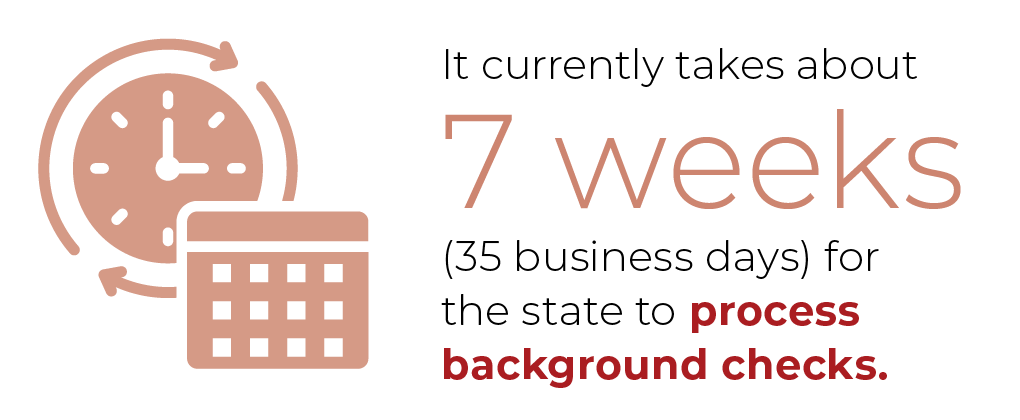 | | | | | Lead Organizations YMCAs of Northern New England The Y is one of the nation’s leading nonprofits that strengthens communities through the impact areas of Youth Development, Healthy Living, and Social Responsibility. Every day, the Ys work side-by-side with their neighbors to make sure that everyone, regardless of age, income or background has the opportunity to learn, grow and thrive. The YMCA Alliance of Northern New England supports collaboration amongst the region’s Ys and community partners to increase their impact and advocate for positive change in their communities. Vermont Head Start Association VHSA works extensively with state and local organizations and their leaders in early education and child care. As a result of these partnerships, young children and their families receive the services they want to be successful. VHSA and their partners help with coordinating health, mental health, oral health, children with special health needs, transitions, housing, food, and many more services. | | | | | |  | Alliance ‘26 Legislative Agenda Issue Spotlight – VT 211 and Fingerprinting – 2/9 In the coming weeks, the Alliance is hosting virtual Issue Spotlights that will focus on one or two issues from the Alliance’s 2026 Legislative Agenda. In discussions led by representatives from the issue’s Lead Organizations, participants will be able to ask direct questions and hear a brief legislative update. The next session will be held Monday, February 9, at 3:00 pm, and will focus on the request by the United Ways of VT for adequate investment to ensure that Vermont 211 can continue to provide consistent, high-quality support to Vermonters in need, and on the efforts by advocates to secure improvements to state administrative systems and data infrastructure to allow for decreases in processing time. Hosted by the Alliance, United Ways of VT, the VT Head Start Association, and the YMCAs of Northern New England, this session is a great opportunity to learn more about these important issues, where they stand in the Legislature, and how to get involved. | | | | | |  | | | | | The Vermont Early Childhood Advocacy Alliance is a statewide coalition formed in 2000 of early childhood professionals, parents, organizations, businesses, and strategic partners committed to improving public policies that impact young children between birth and age eight in the areas of health, safety, food security, economic security, and early care and education. The Alliance crafts an annual Legislative Agenda in partnership with early childhood organizations, provides year-round advocacy support, and facilitates meaningful interactions with policymakers at key times during the decision making process. | | | | 7 School Street | Montpelier , Vermont 05602 vecaa.org The Vermont Early Childhood Advocacy Alliance is a program of the Vermont Community Loan Fund. | | | | | | | | | |
