| |  | 2026 Legislative Agenda Results Summary The 2026 Legislative session went into overtime, with adjournment not coming until the end of May. Overall, it was a moderately successful session for the early childhood community and for the issues on the Alliance’s 2026 Legislative Agenda. There were challenges resulting from budget limitations and the complexity of the issues undertaken by our Lead Organizations, but progress was made on a number of fronts. In some cases, progress came with compromises, or with funding that was one-time rather than base. And for several key issues, including the early childhood educator bill, work was not completed this year and will continue next year. Alliance staff will be working over the summer and fall with our members to begin planning for advocacy in the next biennium. We are also offering educational opportunities to legislative candidates, and keeping an eye out for any federal funding cuts agreed to in Washington, DC. For more information on any of these issues, please get in touch with the lead organizations listed below or with Matt Levin, Alliance Executive Director, at [email protected]. | | | | 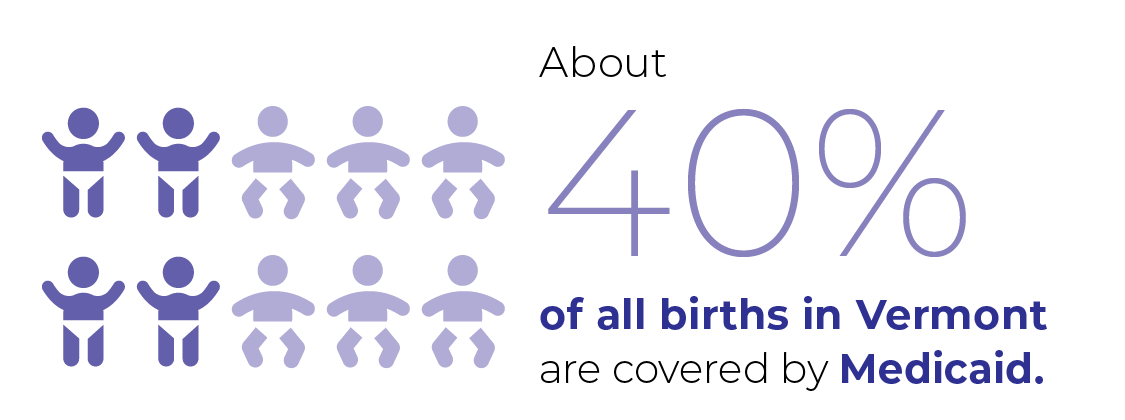 | ACCESS TO DOULA COVERAGE FOR MEDICAID BIRTHS: Implement Act 50: H. 611 Result: Regulatory Progress Pre-session goal: Ensure that OPR and DVHA implement Act 50 as directed by the Legislature. As introduced, H.611, a DVHA/Medicaid technical amendments bill, included language allowing a two-year extension to the Act 50/ requirement that Dept. of VT Health Access (DVHA) apply for a State Plan amendment that would give the needed federal approval for the Vermont Medicaid program to provide reimbursement for Medicaid beneficiaries who opt for doula services. The House version of the bill provided a one-year extension. The Senate concurred with that language and further amended the bill to align the doula certification process timeline administered by the Office of Professional Regulation (OPR). This version of the bill was passed by both chambers. Advocates also worked with regulators to ensure necessary steps are being taken to support implementation of Medicaid coverage. With the passage of H. 611 and regulatory work in process, doula services will potentially be available for Medicaid beneficiaries on July 1, 2027, pending federal approval. LEAD ORGANIZATION: Doula Association of Vermont | | | | 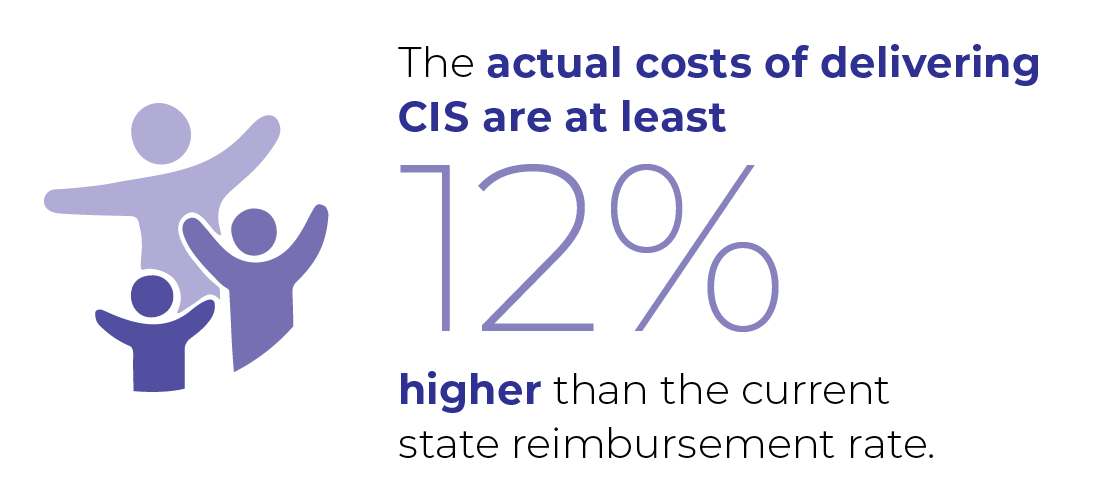 | CHILDREN’S INTEGRATED SERVICES (CIS): Funding the CIS System and SAG Result: No additional funding secured Pre-session goal: Secure: 1) an FY27 Budget increase of about $1.8m to allow for full funding of the per member/per month rate of $738 identified by the recent study of the true cost of care; 2) identification of a permanent funding source that will provide at least $3 million in annual funding to the Special Accommodation grant (SAG) program; and 3) full funding for the development of CIS data management software. This session saw limited discussion of CIS-related issues. The Governor’s Recommended FY27 Budget contained no funding increase for CIS. Given the challenging budgetary environment, the Legislature did not consider including any additional funding for CIS in their FY27 Budget. The FY27 Budget will continue to provide $300,000 in base funding for SAG. This funding will supplement $2 million in federal grant funds secured through the state’s Preschool Development Grant. CDD officials are still working to determine how that federal funding will be utilized over the full course of the state’s next fiscal year. LEAD ORGANIZATION: VT Early Childhood Advocacy Alliance | | | | 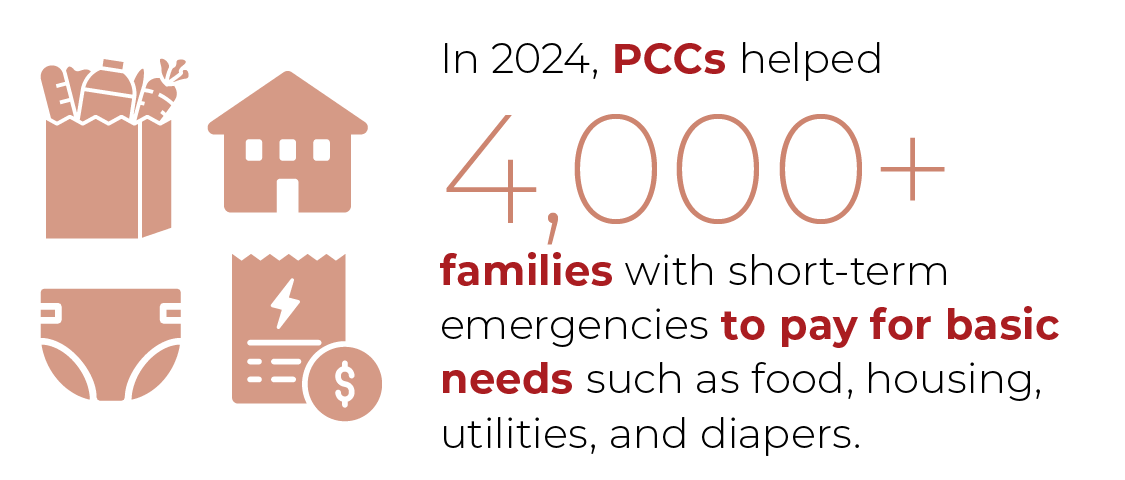 | PARENT CHILD CENTER NETWORK: Supporting Families in Uncertain Times: FY27 Budget Result: Partial funding secured Pre-session goal: Secure $1.88 million increase to the PCC Integrated Grant to support staff capacity, expand clients’ access to concrete supports, and to implement statewide benefits navigation. The Governor’s Recommended FY27 Budget did not include any additional funding for the Parent Child Center Network (PCCN) Integrated Grant. The House Human Services Committee supported providing $180,000 in base funding to the PCCN for concrete supports, as well as funding for the Benefit Assisters navigation proposal. The House Appropriations Committee, however, included only one-time funding for the concrete supports, and no funding for the Benefit Assisters proposal. The Senate concurred with the House proposals and added language indicating legislative intent to include PCCs in future inflation-related funding increases currently provided to other service provider networks. A compromise version of the language was agreed to during the Budget Conference Committee negotiations and was included in the Legislature’s FY27 Budget. Funding for the Benefit Assistors proposal was considered in the Budget Conference Committee, and the Legislature’s final FY27 Budget included $3.5 million in one-time funding for grants to PCCs, Hunger Free VT, VT 211, and other agencies to assist people in navigating changes to the application processes for 3SquaresVT and Medicaid, which will help more eligible people stay enrolled in these important benefit programs and keep federal funds flowing to our state. LEAD ORGANIZATION: Vermont Parent Child Center Network | | | | 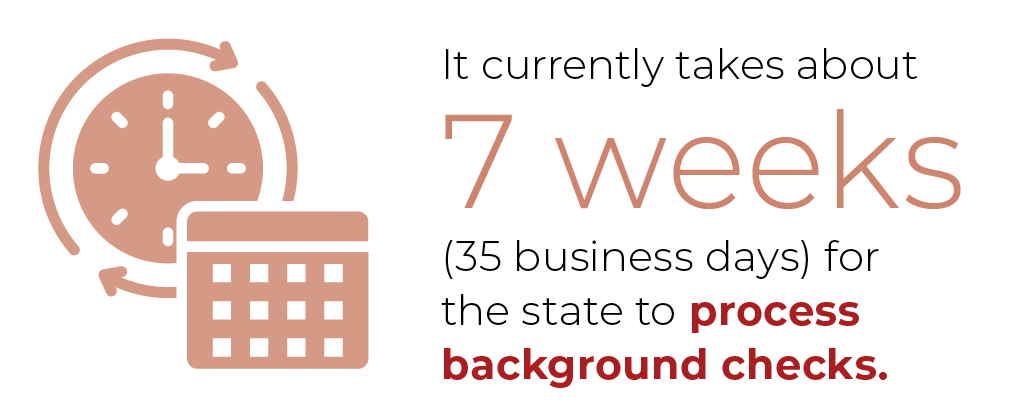 | FINGERPRINTING: Streamline and Modernize Background Checks for Early Childhood and Afterschool Educators Result: Federal funding secured, modernization RFP issued Pre-session goal: Secure improvements to state administrative systems and data infrastructure to allow for decreases in processing time Responding to ongoing concerns from advocates and providers, state agencies have continued efforts this year to address delays in fingerprinting and background check processing for early childhood and afterschool educators. Building on a $1 million federal Preschool Development Grant secured by the Vermont Child Development Division to modernize the state’s aging technology systems, the Vermont Crime Information Center issued a Request for Proposals (RFP) this spring for a new criminal history record check data management platform, with deployment anticipated by the end of the year. In the meantime, agencies have implemented operational improvements aimed at reducing incomplete submissions and speeding processing times. LEAD ORGANIZATIONS: YMCAs of Northern New England and the VT Head Start Assoc. | | | |  | 3SQUARESVT FUNDING: Ensure Access for Vermont Families: FY27 Budget Result: Funding secured Pre-session goal: Secure the necessary state funding to cover the increased cost to administer 3SquaresVT. The Governor’s Recommended FY27 Budget contained $4.3 million to support the increased administrative expenses the state is required to pay after the passage of H.R. 1 last July. After discussions with advocates, it was agreed that this amount, while lower than initial estimates, was adequate. The Legislature included the funding in their FY27 Budget. LEAD ORGANIZATION: Hunger Free Vermont | | | |  | CHILD PROTECTION: Close the Background Check Loophole to Keep All Children Safe: H. 931 Result: Loophole closed Pre-session goal: Amend state law to require background checks for all Agency of Education employees and contractors who enter schools. With encouragement from advocates, the House Education Committee inserted language necessary to close the background check loophole into H. 931, this year’s Miscellaneous Education bill. The bill was passed by both chambers. LEAD ORGANIZATION: Prevent Child Abuse Vermont | | | |  | FAIR SHARE FOR VERMONT: Raising State Revenue to Build a Vermont that Works for Everyone Result: No legislation passed Pre-session goal: Creation of a new tax bracket on annual personal income over $500,000, generating over $100 million annually in state revenue to improve public goods and services and increase resilience to federal funding cuts. The primary initiative to change state tax policy was led by House members who proposed to recapture a portion of the federal tax cuts given to the wealthiest Vermonters in H.R. 1 through passage of a new tax bracket on the top 1% of income-earners and a surcharge on unearned (non-wage) income for high-income Vermonters. These policies would have generated approximately $150 million annually in state revenue to improve public goods and services and increase resilience to federal funding cuts. The House Ways and Means Committee engaged in substantial discussions of this proposal over several weeks as they considered a number of different tax bills. While the legislation ultimately was not passed by the Committee, the policy garnered substantial legislative attention from both chambers and has significant momentum moving into the 2026 election cycle and 2027 legislative session, especially as the impacts of federal funding cuts from H.R. 1 intensify. LEAD ORGANIZATION: Fund Vermont’s Future Campaign | | | |  | INFORMATION AND REFERRAL: Strengthening VT 211’s Connection, Outreach, and Impact: FY27 Budget Result: Full funding secured Pre-session goal: Secure $1.6 million in base funding for Vermont 211. The Governor’s Recommended FY27 Budget included a reduction of $332,000 in base funding from the FY26 appropriation of $1.6 million. The House Human Services, Health Care, and Appropriations Committees all strongly backed Vermont 211’s request for full funding, which was included in the House FY27 Budget. While the Senate reduced the House allocation by $166,000 in its budget, full base funding of $1.6 million was restored in the final FY27 Budget that was approved by the Legislature. While this funding level will necessitate some strategic program changes, it does allow for critical infrastructure and technology updates to position VT 211 to better support and respond to community needs. Staff will no longer answer calls during the overnight hours, but new tools, such as an intelligent virtual assistant and direct connections to 988 and 911, will be available to assist callers during that time. The on-line database will remain available 24/7. LEAD ORGANIZATION: United Ways of Vermont | | | |  | EARLY CHILDHOOD EDUCATION: Building on Our Child Care Progress: FY27 Budget Result: Minor funding reductions Pre-session goal: Protect child care funding in the state budget; increase access and affordability for children and families; and, strengthen the early childhood education workforce. The Governor’s Recommended FY27 Budget proposed level funding for most child care initiatives, but did include some smaller cuts to base funding for child care eligibility specialists, child care capacity grants, and child care quality initiatives. The majority of those cuts would be offset by federal funding, except for the cut to eligibility assessments by community agencies. These reductions were accepted by the Legislature and included in the final FY27 Budget, meaning that Act 76 investments are protected for FY27. Funding will go directly to child care programs, helping them expand and improve quality, serve more children, and better support their staff, while also helping more than 10,000 eligible Vermont families afford and access care. Advocates will be paying careful attention in future budget years to ensure that base funding for child care is not eroded. LEAD ORGANIZATIONS: Let’s Grow Kids Action Network (LGKAN) and Vermont Association for the Education of Young Children (VTAEYC) | | | |  | ECE WORKFORCE: Establishing Early Childhood Education as a Profession: S. 206 Result: Bill passed by Senate Pre-session goal: Pass the Early Childhood Education (ECE) Profession Bill, which creates individual licensure to practice for early childhood educators outside the Agency of Education system of licensure. The Senate took extensive testimony and passed a strong version of S. 206, which would have created a profession with a system for self-governance and individual licensure for early childhood educators. Advocacy by family child care business owners, center-based educators and directors, and early childhood education higher education students and instructors helped ensure strong bipartisan support for the bill. After Senate passage, the House Government Operations & Military Affairs and Human Services Committees considered the bill, but ran out of time to move the bill out of committee before the end of session. However, Rep. Theresa Wood, the current Chair of the House Human Services Committee, committed to taking up the bill next session and expressed gratitude for the work of advocates on the issue in recent years. Advocates expect to continue work on the issue in the coming biennium. LEAD ORGANIZATION: VT Association for the Education of Young Children (VTAEYC) | | | |  | EMERGENCY SHELTER: Protect Access for Unsheltered Families: FY27 Budget, H. 938 Result: Partial program funding, compromise bill passed Pre-session goal: Reduce or eliminate unsheltered homelessness by preserving and expanding access to the General Assistance (GA) Emergency Housing program for Vermont individuals and families experiencing homelessness by retaining funding equal to FY26 Budget one-time and base appropriations of about $39 million. The Governor’s FY27 Recommended Budget included $82.6 million for both existing and new programs that address Vermonters’ need for emergency shelter and supports. That proposal would have reduced the capacity of the GA Emergency Housing program, both in the number of days recipients could receive shelter and the number of beds available for most of the year. The Legislature did not support this initial proposal, and instead worked with the Administration to develop legislation that represented a compromise emergency shelter plan that both legislators and the Administration could support. On the positive side, H. 938 creates a new statutory program, the Homelessness Response Continuum, which will provide more predictability and consistency for households at risk of or experiencing homelessness, community providers, and the Administration. On the negative side, it leaves many operational questions unanswered. It also limits funding for this program to the Governor’s proposed $82.6 million, which is not sufficient to meet the need for emergency shelter and supports. H.938 does add funding for rental assistance, case management, municipal grants, and additional shelter capacity, with the intent to form a more cohesive and stable homelessness response system over time. That said, the bill recognizes that FY27 will be a transition year and that putting this new system in place will require an extensive rulemaking process, which must provide opportunities for stakeholder input. LEAD ORGANIZATION: ACLU of Vermont | | | |  | FEDERAL FUNDING CUTS: Supporting Responses to Federal Funding Reductions: FY27 Budget Result: No action, response language passed Pre-session goal: Provide strategic, timely, and coordinated advocacy responses to federal funding reductions that ensure our community’s voices are heard, and that core needs are not unnecessarily pitted against one another. Congress has so far taken no significant action during 2026 on federal budget matters. The Legislature did include language in the FY27 Budget outlining an administrative process for the Secretary of Administration, the Joint Fiscal Committee, and the Emergency Board to prepare and implement spending reduction and transfer plans, or use reserve funds to maintain funding until the General Assembly is in session, in the case of up to $50 million in federal funding losses. Changes in federal funding will be monitored by the Secretary of Administration. LEAD ORGANIZATION: VT Early Childhood Advocacy Alliance | | | |  | REACH UP: Ending Child Poverty is a Policy Choice: FY27 Budget, H. 657 Result: Asset Limit repealed, No additional funding secured Pre-session goal: Ensure that Reach Up grants fulfill their intended purpose by fully funding Reach Up and eliminating the arbitrary asset limit to simplify eligibility. Unfortunately, the Governor’s Recommended FY27 Budget once again built in a forecasted reduction in Reach Up caseload and used the resulting “savings” in other areas of his budget. The Legislature agreed with this proposal. However, the Budget passed by the Legislature does include language requiring the Administration to conduct a study of the Reach Up program generally, and that specifically includes an “actionable, phased plan that estimates the amount needed to remove the ratable reduction”. The Legislature also took action to repeal the state’s asset limit for Reach Up recipients. Language in H. 657, approved by both the House and Senate, will remove the language from statute as of July 1, 2026. LEAD ORGANIZATION: Voices for Vermont’s Children for the Vermont Reach Up Coalition | | | |  | CACFP SPONSOR FUNDING: Improve Food Access in ECE Settings: FY27 Budget Result: Partial funding secured Pre-session goal: Secure $182,000 in base funding in the FY27 Budget for Vermont’s CACFP sponsor organizations The Governor’s Recommended FY27 Budget did not include any funding for sponsoring organizations in the Child and Adult Care Food Program (CACFP). The House Education Committee supported adding funds to the House budget, and the House Appropriations Committee did add $182,000 in one-time funding for CACFP to their FY27 Budget, which was passed by the House. The Senate supported the funding but reduced it to $150,000. After negotiations in the Budget Conference Committee, the Legislature included a compromise amount of $157,000 in one-time funding in their FY27 Budget. LEAD ORGANIZATION: Hunger Free Vermont | | | | | | | | | | The Vermont Early Childhood Advocacy Alliance is a statewide coalition formed in 2000 of early childhood professionals, parents, organizations, businesses, and strategic partners committed to improving public policies that impact young children between birth and age eight in the areas of health, safety, food security, economic security, and early care and education. The Alliance crafts an annual Legislative Agenda in partnership with early childhood organizations, provides year-round advocacy support, and facilitates meaningful interactions with policymakers at key times during the decision making process. | | | | 7 School Street | Montpelier , Vermont 05602 vecaa.org The Vermont Early Childhood Advocacy Alliance is a program of the Vermont Community Loan Fund. | | | | | | | | | |
